March 23, 2026
Summary
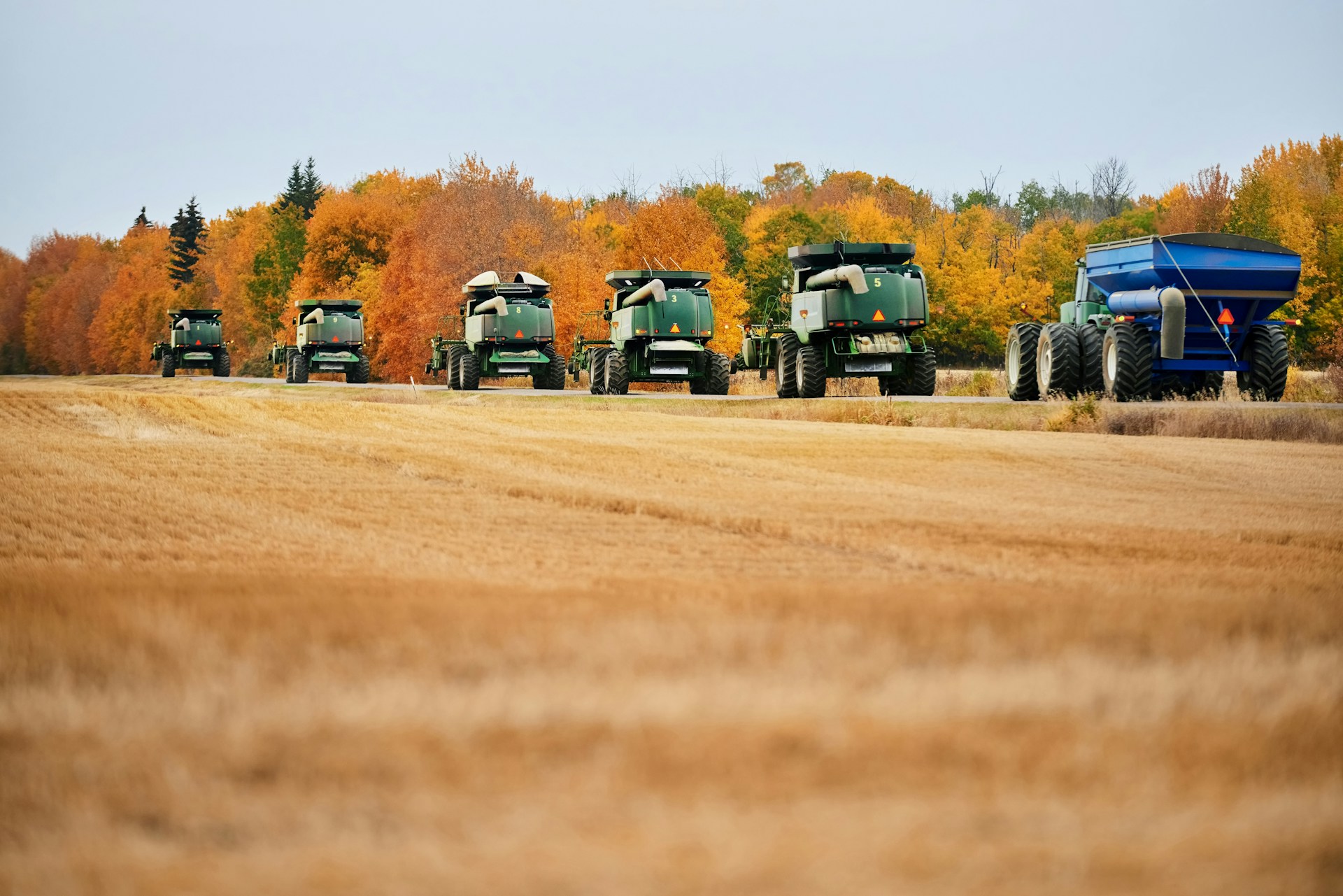
A farmer in Montérégie juggles three tractors, two combine harvesters, and a handful of seasonal workers to cover hundreds of hectares. Between unpredictable weather, equipment breakdowns, and rising diesel prices, every day is a logistical puzzle.
Agricultural fleet management in Quebec is no longer just a matter of coordination—it’s a matter of profitability. Traditional methods based on phone calls and notes scribbled on paper are no longer sufficient.
This is where telematics and GPS tracking come into play. An essential tool for precision agriculture, it provides real-time visibility over the position of each machine, its fuel consumption, and its mechanical status, enabling informed decisions that directly impact farm productivity.
Idle time is the silent enemy of agricultural profitability. A tractor running unnecessarily while the operator takes a break or waits for instructions consumes diesel for nothing. A GPS system identifies these excessive idle periods and allows you to take action. Route optimization in the fields, based on GPS data, can also reduce distance traveled and therefore fuel consumption.
A combine harvester breaking down in the middle of harvest is a nightmare. Preventive maintenance is key, but how do you track it on equipment that is used intensively but seasonally? GPS automates engine hour tracking. You receive an alert when the next maintenance is due, allowing you to plan it before the critical season and avoid costly breakdowns.
Where is the seeder? Did the sprayer fully cover field 4B? Without real-time visibility, these questions create stress and inefficiency. GPS tracking shows the position of all your assets, motorized or not, on a single map. You can monitor work progress live and ensure every task is completed properly.
A critical issue for Quebec agriculture is connectivity. Many farmlands are located in areas with weak or nonexistent cellular coverage. A standard GPS system would therefore be ineffective.
This is why an agricultural fleet management solution must offer dual-mode communication: it uses the cellular network when available but automatically switches to satellite when the signal is lost. This ensures uninterrupted tracking, even in the most remote areas.
Data | Use for the farmer |
Engine hours | Automates preventive maintenance tracking |
Idle time | Identifies fuel waste |
Real-time location | Instantly locates each machine |
Trip history | Confirms that fields have been fully covered |
For many farms, having access to real-time data on tractors and equipment completely transforms field operations management. A GPS platform centralizes this information and provides a complete overview of farm activity, even during the busiest times of the season.
If you would like to see how a telematics solution can integrate with your operation, contact us.
Agricultural fleet management is not limited to tractors and trucks. A modern farm is full of high-value equipment that is not motorized: seeders, sprayers, grain trailers, etc. Knowing where each piece of equipment is in real time is a challenge, especially when operations span hundreds of hectares.
This is where autonomous GPS trackers come in. These small, rugged devices with long-lasting batteries can be attached to any equipment. They transmit their location at regular intervals, allowing you to visualize your entire equipment fleet on a single map.
The benefits are numerous:
For farms that work with contractors or lend equipment to neighbors, this traceability also becomes a responsibility management tool. You know exactly who used which equipment, when, and where, simplifying discussions in case of damage or disputes.
Agricultural fleet management in Quebec is becoming a strategic lever for farms looking to improve operational efficiency and better control costs. By tracking tractors, equipment, and engine hours in real time, farmers can reduce fuel losses, anticipate breakdowns, and better organize fieldwork.
To discover how a GPS solution can adapt to your farm’s reality, request a personalized demo.
Agricultural fleet management in Quebec involves using GPS systems and telematics platforms to track tractors, equipment, and machine usage hours. This data helps farmers optimize machinery use, reduce fuel costs, and better plan agricultural operations.
Yes. Most GPS systems can be installed on older tractors or equipment. When machinery does not have a modern diagnostic port, the GPS device is simply connected to a power source such as the battery, allowing it to transmit location and usage data.
In rural regions where cellular coverage is limited, some systems use hybrid communication. The device transmits data via the cellular network when a signal is available, then automatically switches to a satellite network when the signal disappears, ensuring continuous tracking even in remote areas.

President - Geothentic
Coming from a family of entrepreneurs specializing in the automotive and technology sectors, and being passionate about the environment, it was obvious to me to reconcile these two worlds in order to offer simple and revolutionary technologies for the prosperity of our planet. That's how I founded Géothentic.
 Client access
  Request